
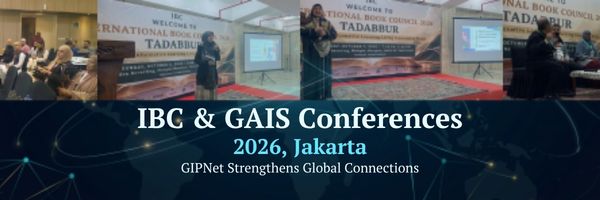
GIPNet Strengthens Global Connections at IBC and GAIS Conferences in Jakarta
Jakarta, Indonesia | 4–7 October 2026
The Global Islamic Parenting Network (GIPNet) strengthened its international engagement through its participation in two major gatherings in Jakarta, Indonesia: the International Book Council (IBC) 2026 and the 5th Annual Conference of the Global Association of Islamic Schools (GAIS).
The events brought together educators, school leaders, authors, scholars and community representatives from around the world to exchange ideas on Islamic education, leadership and nurturing the next generation.
For GIPNet, these gatherings provided valuable opportunities to share perspectives on Islamic parenting, strengthen relationships with educators and explore how families, schools and communities can work together to raise children who are grounded in iman (belief), strong in character and equipped to navigate the challenges of contemporary life.
Prophetic Leadership: Building Effective Teams
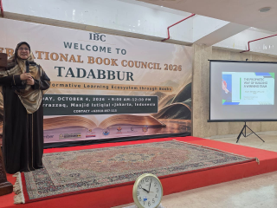
Dr Sabariah Faridah Jamaluddin, a member of GIPNet’s Steering Committee and founder of Little Caliphs International, delivered a presentation titled The Prophetic Way of Building a Winning Team at IBC 2026.
Her presentation explored leadership principles inspired by the example of Prophet Muhammad ﷺ, particularly in building effective teams and encouraging meaningful change.
Prophetic leadership emphasises qualities such as trust, consultation, compassion, shared responsibility and commitment to a common purpose.
These principles have important applications not only in organisations and educational institutions but also within families and communities.
Effective teamwork requires more than bringing people together. It calls for a shared vision, mutual respect and an understanding of how each individual’s contribution supports the larger mission.
For Islamic educational institutions, these principles are particularly relevant. School leaders, teachers and parents must recognise that their roles are interconnected and that meaningful educational outcomes depend on cooperation and trust.
Such collaboration strengthens the collective effort to nurture children who are confident, responsible and grounded in Islamic values.
The Greater Village in Action: A Conversation Beyond the Traditional Panel
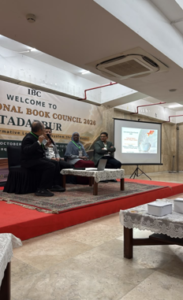
Ahmad Fakhri Hamzah, founder of GIPNet, moderated an interactive fishbowl discussion titled The Greater Village in Action at IBC 2026.
Unlike a conventional panel presentation, a fishbowl discussion brings together a small group of participants for an open, focused conversation while the wider audience listens, reflects and, depending on the format, contributes to the discussion.
The format encourages genuine dialogue rather than a series of prepared speeches. Participants can explore different perspectives, respond to one another’s ideas and collectively examine shared challenges.
The session explored the complementary roles of parents, educators and communities in supporting children’s development.
Its central message reflected GIPNet’s philosophy that raising children is not the responsibility of parents or schools alone. It requires a wider community in which families, educators and other stakeholders recognise their shared responsibilities and work together towards a common purpose.
Parents are their children’s first educators, while schools and communities provide important environments in which children continue to learn, grow and develop their character.
When these different influences work together rather than in isolation, children benefit from more consistent guidance, stronger relationships and a greater sense of belonging.
This collaborative spirit is captured in GIPNet’s guiding principle:
Together We Care for the Child We Share.
Tadabbur: Bringing Qur’anic Guidance into Everyday Life
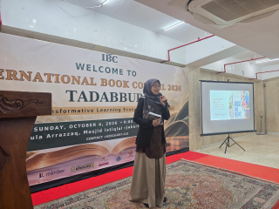
Jamilah Samian, a member of GIPNet’s Steering Committee, delivered a keynote presentation at IBC 2026 exploring the significance of tadabbur and its continuing relevance in today’s world.
Tadabbur involves reflecting deeply on the meanings and messages of the Qur’an and considering how its guidance can be translated into everyday decisions and actions.
In an age characterised by information overload, digital distractions and rapidly changing social influences, the ability to pause, reflect and exercise sound judgement has become increasingly important.
For parents and educators, tadabbur offers an opportunity to move beyond simply telling children what is right or wrong. It encourages thoughtful conversations that help young people connect Qur’anic guidance with the situations and challenges they encounter in their daily lives.
Through such reflection, children can develop a deeper understanding of their identity as Muslims, strengthen their relationship with Allah and learn to make decisions guided by iman (belief), knowledge and sound judgement.
Tadabbur reminds us that the Qur’an is not merely a text to be recited or memorised, but a source of guidance to be understood, reflected upon and lived.
GAIS 2026: Renewing Islamic Education from Within
The 5th Annual GAIS Conference, held from 4–7 October 2026, brought together Islamic education practitioners and leaders under the theme Tajdīd in Practice: From Inner Renewal to Outer Transformation.
The conference highlighted the importance of meaningful renewal in Islamic education, beginning with personal and spiritual development and extending to classrooms, schools and wider communities.
The EHSAN Care Ecosystem: Building a Greater Village of Care
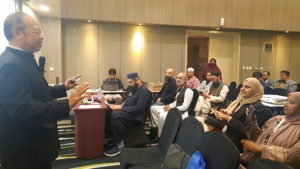
At GAIS 2026, Ahmad Fakhri Hamzah, founder of GIPNet, presented The Child We Share: Building the Greater Village, introducing the EHSAN Care Ecosystem, a flexible five-tier Islamic pathway for supporting children’s wellbeing.
The presentation addressed a fundamental challenge: although parents, schools and communities care deeply about children, their efforts are often fragmented. When a child struggles emotionally, behaviourally or socially, those responsible may respond independently, without a clear and coordinated pathway for providing support.
Drawing attention to concerns identified through GIPNet’s global parenting survey, Ahmad Fakhri emphasised the need to move beyond isolated responses towards a shared system of care.
The EHSAN model proposes five interconnected levels of support:
- E — Early Awareness: Recognising early signs of concern before difficulties escalate.
- H — Home Support: Providing reassurance, attentive listening and family-based support.
- S — School Intervention: Involving educators through monitoring, counselling and pastoral care.
- A — Advocators’ Advice: Drawing on guidance from community organisations, NGOs and youth mentors.
- N — Notable Experts: Referring complex concerns to qualified specialists, including psychologists and clinicians.
Rooted in Islamic principles such as amanah (responsibility), rahmah (compassion), hikmah (wisdom) and sitr (protecting dignity and confidentiality), EHSAN seeks to ensure that children and families receive appropriate support without unnecessary stigma.
Importantly, the model is not intended as a rigid sequence. Where concerns are urgent or serious, children can be referred directly to specialist care rather than progressing through every level.
The presentation advocated a shift from reactive crisis management to proactive, compassionate and coordinated support. It called on Islamic schools to strengthen their connections with families, community advocates and professional networks.
The guiding message was clear: No child, parent or educator should be left to struggle alone.
The EHSAN Care Ecosystem offers a practical expression of GIPNet’s vision of a Greater Village of Care, in which everyone involved in a child’s development shares responsibility for their wellbeing.
Fitrah-Centred Education and Inner Renewal
Sr Kathryn Jones, a member of GIPNet’s Steering Committee from Australia and founder of Back to the Fitrah Mentoring Academy, also contributed as a presenter at GAIS 2026.
Kathryn’s wider work focuses on fitrah-centred approaches to parenting and education, particularly the importance of recognising how adults’ emotional awareness, assumptions, relationships and everyday responses influence children’s development.
Her work highlights a vital principle: effective education is not simply about what adults teach, but also about who they are and how they relate to the children entrusted to their care.
Parents and educators who are attentive to their own emotional and spiritual development are better positioned to create environments in which children feel secure, respected and supported.
This perspective complements GIPNet’s emphasis on the roles of parents and educators as guides, mentors and role models whose influence extends far beyond formal instruction.
GIPNet Booths: Building Connections and Exploring Collaboration
Beyond the presentations and discussions, GIPNet maintained information booths at both IBC and GAIS, providing opportunities to introduce the network, its mission and its initiatives to participants from different countries.
The booths served as meeting points for educators, school leaders, parenting advocates and representatives of organisations interested in strengthening Islamic parenting education.
They also provided opportunities to exchange ideas, explore potential partnerships and encourage greater cooperation between parents and educational institutions.
GIPNet’s presence at both events highlighted an important message: conversations about Islamic education must include parents.
While schools make essential contributions to children’s intellectual, social and spiritual development, the home remains their first and most enduring learning environment.
The values children learn at school need to be reinforced through the relationships, conversations and examples they experience at home.
Likewise, parents benefit when schools recognise them as partners in the educational journey rather than merely recipients of information about their children’s progress.
Stronger home-school relationships are therefore essential to nurturing young people who can navigate contemporary challenges while remaining grounded in their faith and values.
Moving Forward: Strengthening the Greater Village
GIPNet’s participation in Jakarta marked another meaningful step in its efforts to build an international community committed to strengthening Islamic parenting and education.
Although the presentations explored different themes, a common message emerged: nurturing the next generation requires more than transmitting knowledge.
It calls for reflection, compassion, purposeful leadership, strong relationships and cooperation among everyone involved in a child’s upbringing.
Tadabbur reminds us to seek guidance from the Qur’an and translate that guidance into everyday life. Prophetic leadership provides a model for building trust and working towards shared goals. Fitrah-centred education encourages adults to recognise the profound influence of their own character and conduct on children’s development.
The EHSAN Care Ecosystem adds another dimension by offering a structured approach to translating shared concern into coordinated action, ensuring that children receive appropriate support when they need it.
Together, these perspectives reinforce the importance of nurturing children not only to succeed academically, but also to develop a strong Islamic identity, sound judgement, resilience and a sense of responsibility towards others.
For GIPNet, the gatherings were opportunities not only to share knowledge but also to cultivate relationships and explore new possibilities for international collaboration.
As the network continues to grow, GIPNet remains committed to supporting parents, educators and communities with knowledge, resources and opportunities for meaningful engagement.
Ultimately, the goal is to nurture a generation of young Muslims who are grounded in their faith, capable of leading themselves and, insha’Allah, equipped to lead and contribute positively to others.
Together We Care for the Child We Share.