
Infographics
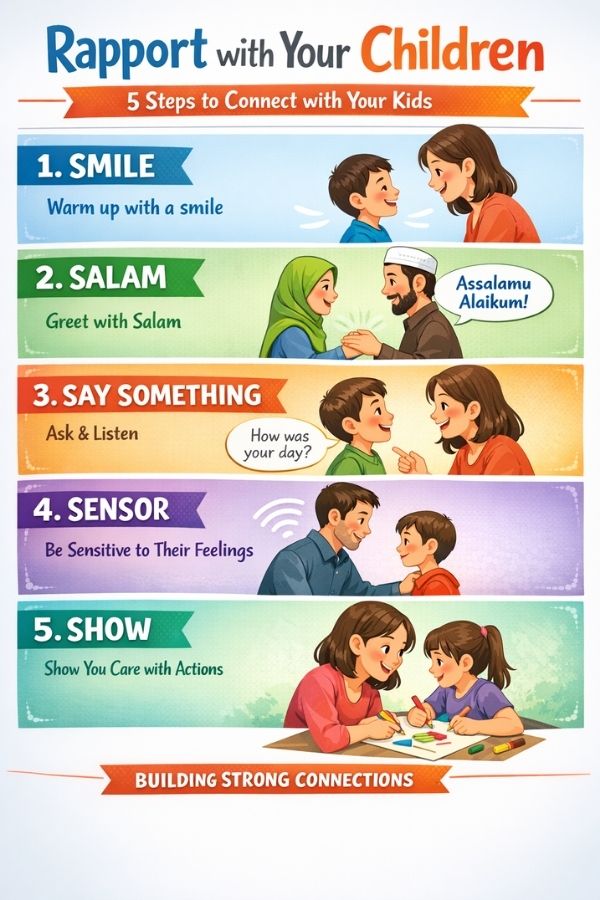
Rapport with Your Children – 5 Steps to Connect with Your Kids
Connection before Correction.
Building a bond with your child begins with the Sunnah — a smile, a salam, and sincere listening.
These 5 simple steps can transform your home into a space of love and understanding.
The Prophet ﷺ taught us that warmth and gentleness open hearts. Practice the 5S of connection — Smile, Salam, Say Something, Sensor, Show — to strengthen your relationship with your children every day.
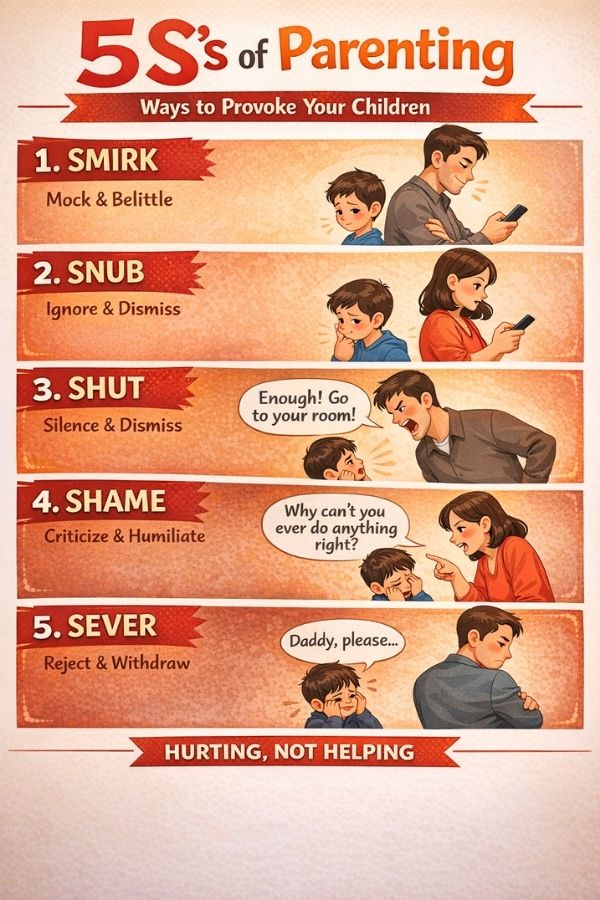
5S’s of Parenting – Ways to Provoke Your Children
The 5 “Don’ts” of Parenting — Sometimes, without realizing, we provoke our children’s hearts through our tone, attitude, or silence.
💔 Mocking, ignoring, or withdrawing doesn’t teach discipline — it builds distance.
Let’s pause, reflect, and choose compassion over criticism.
These 5 common reactions — Smirk, Snub, Shut, Shame, and Sever — may seem small, but they deeply impact a child’s confidence and emotional safety. Awareness is the first step toward change.
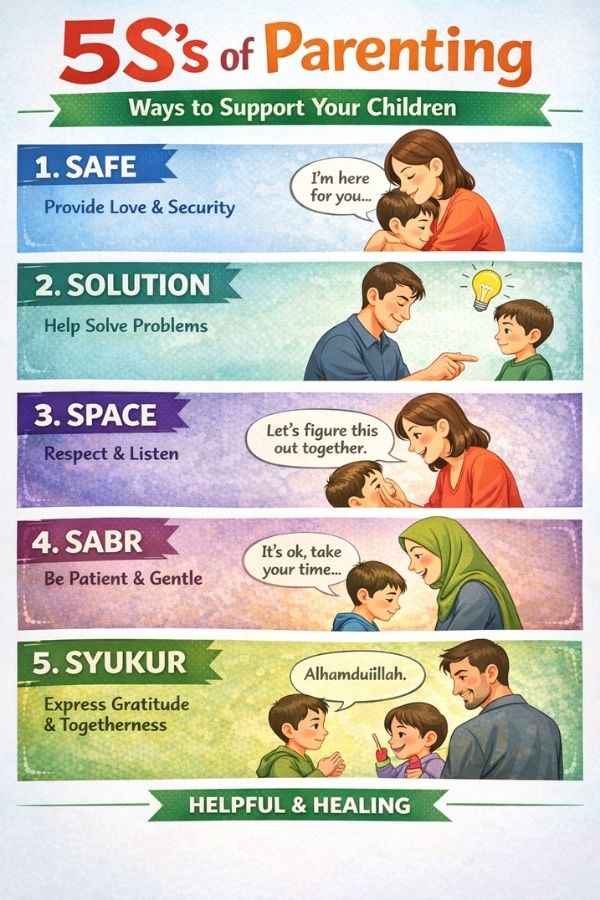
5S’s of Parenting – Ways to Support Your Children
Parenting with Mercy & Mindfulness
Every child deserves to feel Safe, Supported, and Seen.
These 5S’s — Safe, Solution, Space, Sabr, Syukur — help you nurture your child’s emotional, spiritual, and mental wellbeing the Islamic way.
Children thrive when parents guide with patience, gratitude, and presence. This model encourages a balanced approach — nurturing love while setting respectful boundaries.
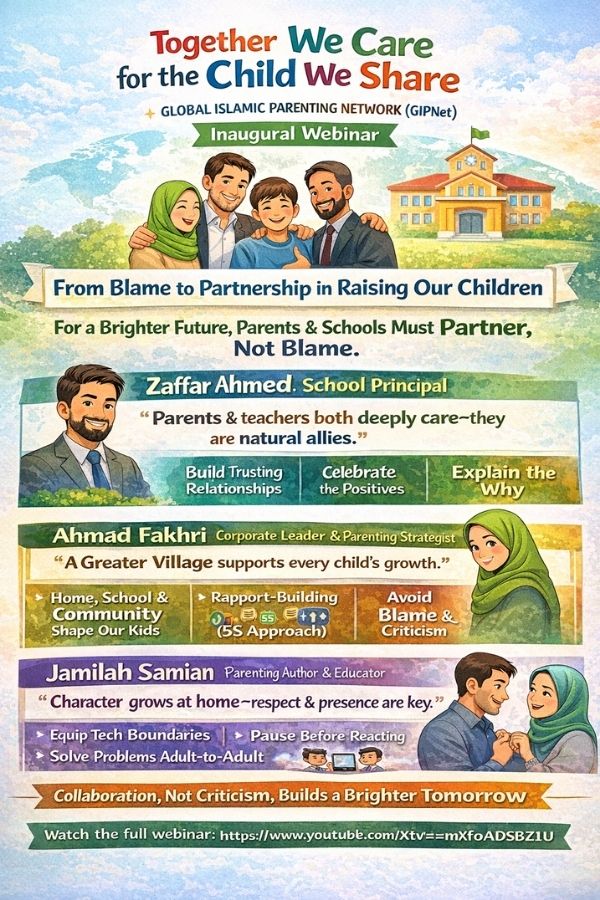
Together We Care for the Child We Share
From Blame to Partnership in Raising Our Children
Parents and schools are not opponents — they are partners in shaping the next generation.
Join GIPNET’s mission to strengthen this partnership through faith, communication, and collaboration.
💬 Collaboration, not criticism, builds a brighter tomorrow.
This webinar highlights how parents, educators, and communities can unite to raise emotionally strong, morally upright children — guided by Islamic principles of cooperation and compassion.
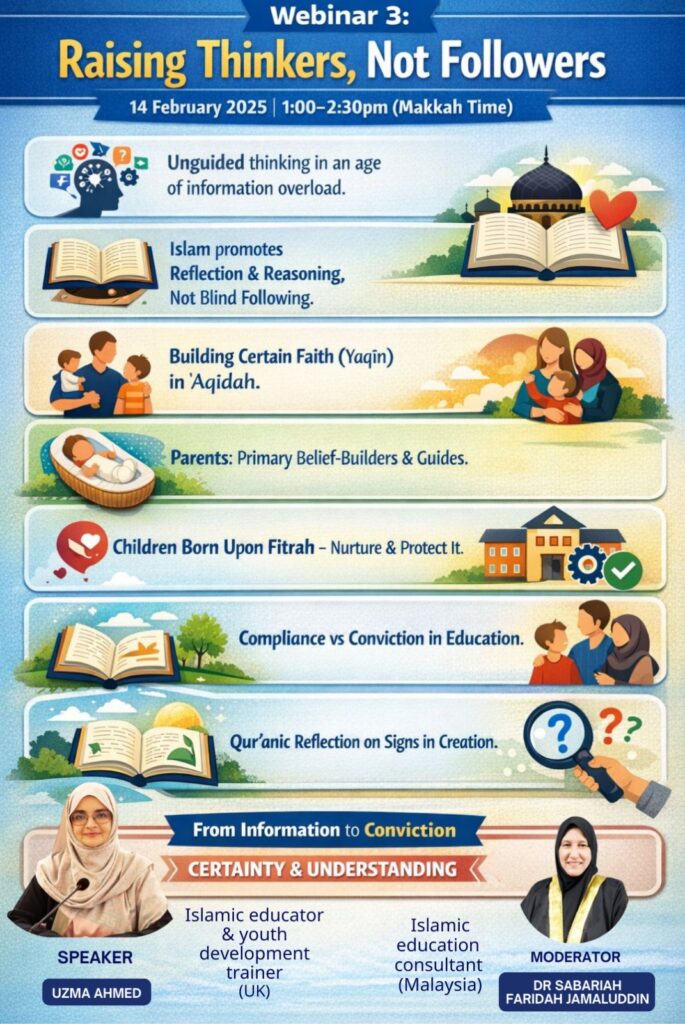
Raising Thinkers, Not Followers
1. Encourage Questions, Not Just Obedience
Children develop strong thinking skills when they are allowed to ask why and how, not just told to obey. Questions help them understand the reasons behind values and decisions.
2. Build Understanding, Not Blind Agreement
Instead of expecting children to simply follow instructions, guide them to understand principles and consequences. When they grasp the reasoning, their choices become more thoughtful and responsible.
3. Nurture Courage to Think Independently
Children who are encouraged to think develop the confidence to make ethical decisions, even when others around them choose differently.
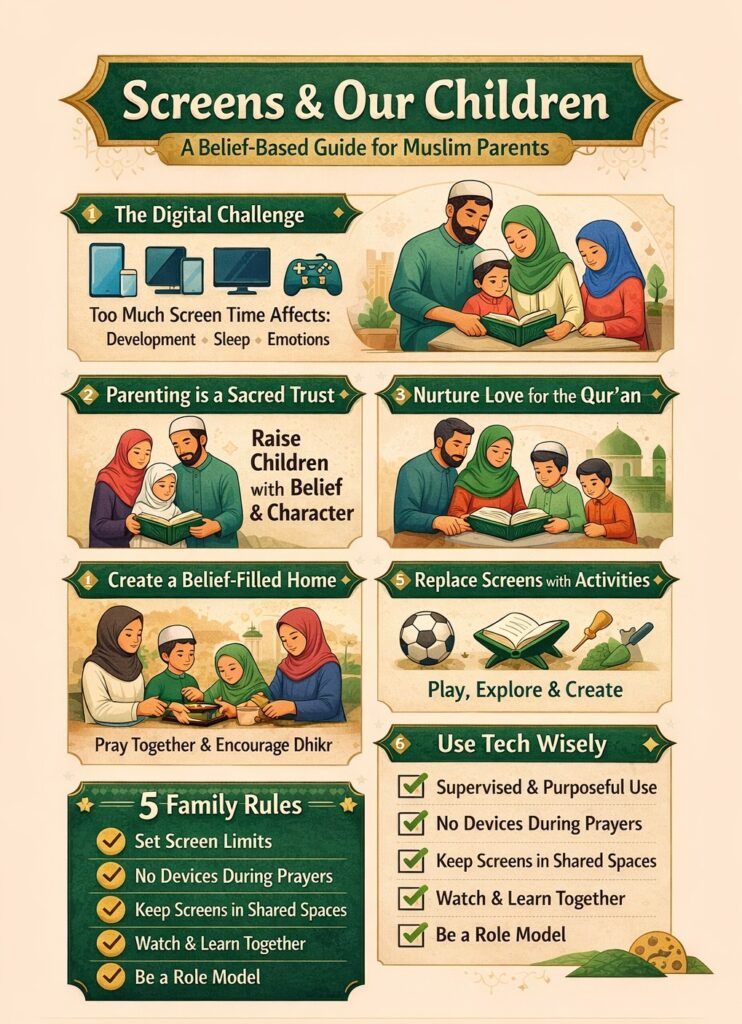
Screens & Our Children
A Belief-Based Guide for Muslim Parents
1. The Digital Challenge
Too much screen time affects development, sleep, and emotion
2. Parenting is a Sacred Trust
Raise children with belief and character.
3. Nurture Love for the Qu’ran
4. Create a Belief-Filled Home
Pray together and encourage dhikr.
5. Replace Screens with Activities
Play, explore, and create.
6. Use Tech Wisely
✅ Supervised and purposeful use.
✅ No devices during prayers.
✅ Keep screens in shared spaces.
✅ Watch and learn together.
✅ Be a role model.
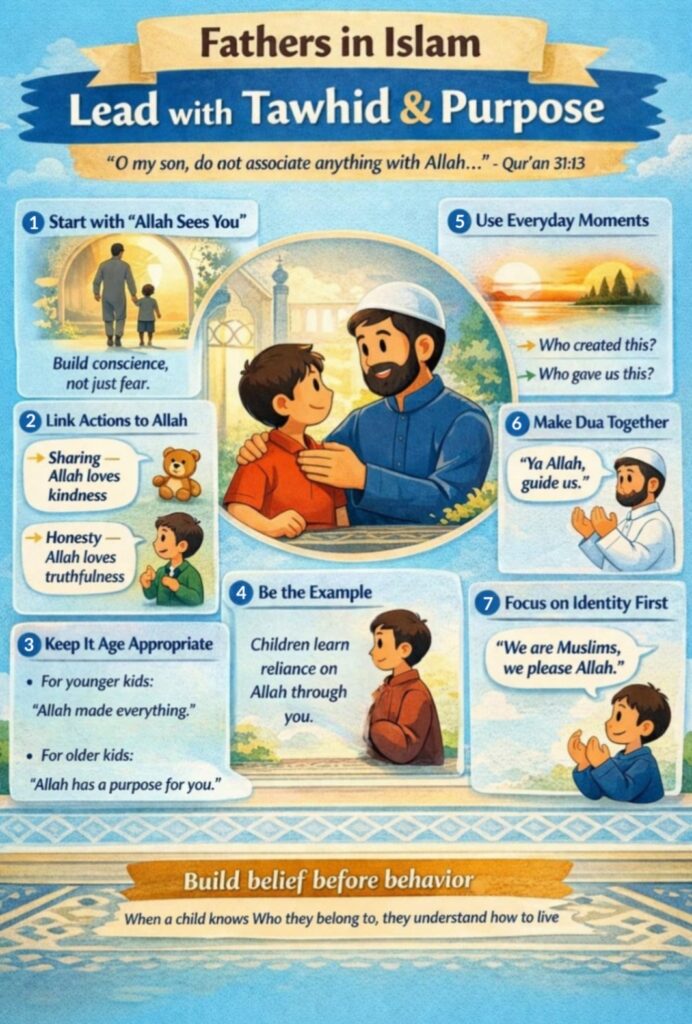
Fathers In Islam
Lead with Tawhid & Purpose
(Inspired by Luqman’s advice: “O my son, do not associate anything with Allah…” — Qur’an 31:13)
1. Start With “Allah Sees You.”
Simple message: “Allah sees what you do, even when no one else does.”
Why it matters: Builds internal conscience, not just fear of punishment.
2. Link Daily Actions to Allah
Say this often: “We do this because Allah loves it.”
Examples:
Sharing → Allah loves kindness
Honesty → Allah loves truthfulness
3. Keep It Age-Appropriate
For younger kids: “Allah made everything.”
For older kids: “Allah has a purpose for you.”
4. Use Everyday Moments
Turn life into lessons: Sunset → “Who created this?” Food → “Who provided this?” Goal: Make Tawhid alive, not abstract.
5. Be the Example
Ask yourself: “Do my actions reflect tawhid?”
Because: Children see belief before they understand it.
6. Repeat With Warmth
Notice Luqman’s tone: “O my son…”
Tip: Correct with connection, not lectures.
7. Make Dua Together
Short and simple: “Ya Allah, guide us.”
Impact: Children learn reliance on Allah through you.
8. Focus on Identity First
Instead of: “Don’t do that.”
Try: “We are Muslims; we choose what pleases Allah.”
Bottom Line
Build belief before behavior. When a child knows who they belong to, they understand how to live.
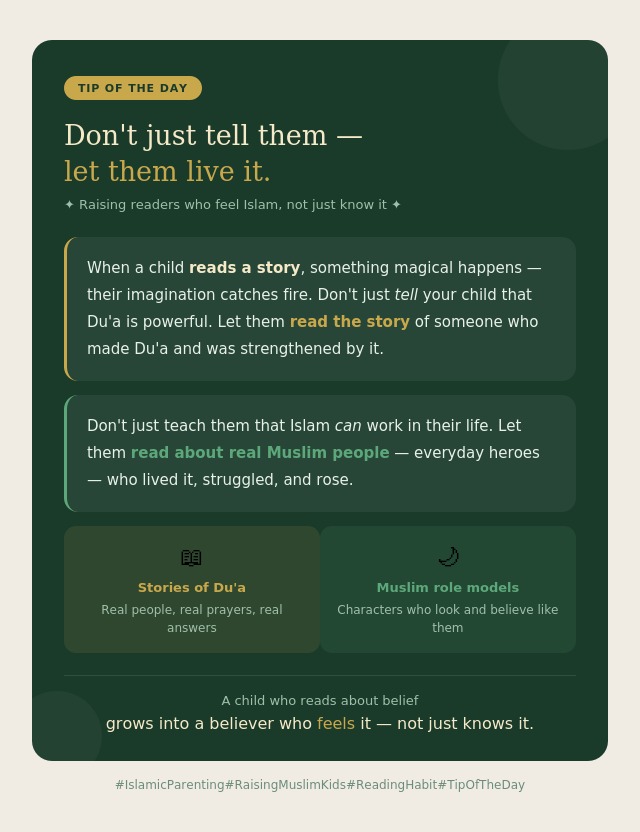
Raising Children Who Live Their Faith Through Reading
1. Don’t Just Teach Islam — Let Them Experience It
Instead of only telling children that du’a, faith, and Islamic values matter, help them see and feel these lessons through:
- meaningful stories
- real Muslim role models
- examples of people who lived through struggle with faith
The goal is for children to emotionally connect with Islam, not merely memorize concepts.
Key message:
A child who feels belief is more likely to internalize it than one who only learns facts.
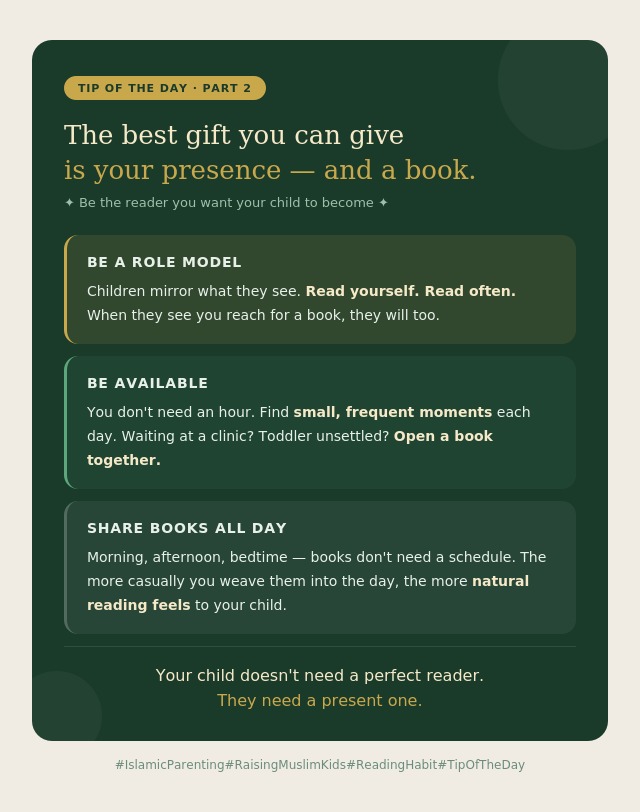
2. Parents Must Model Reading
Children copy what they consistently observe.
Practical ways parents can do this:
- Read regularly yourself
- Make books visible and accessible
- Use small daily moments for shared reading
- Integrate books naturally into routines
Reading doesn’t require perfect schedules or long sessions.
Consistency matters more than duration.
Key message:
Your presence matters more than perfection.
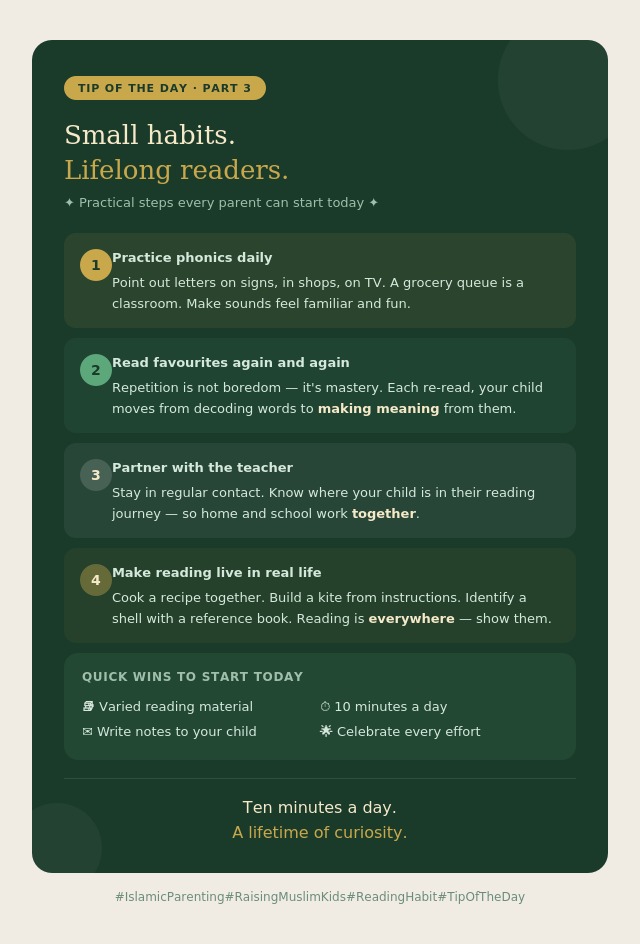
3. Build Small, Sustainable Reading Habits
Lifelong readers are shaped through repeated small actions.
Recommended habits:
- Practice phonics and letter recognition daily
- Re-read favourite books often
- Collaborate with teachers
- Connect reading to real-life activities (recipes, instructions, signs, labels)
Even 10 minutes a day creates long-term impact.
Overall Takeaway
The series emphasizes that raising strong readers — and strong believers — happens through:
Example + Presence + Storytelling + Consistency
The underlying philosophy:
Children don’t just need information.
They need connection, lived examples, and parents who actively embody what they hope to teach.