

- This event has passed.
TOGETHER WE CARE FOR THE CHILD WE SHARE: A Thought-Provoking Discussion Where School And Home Stand As One
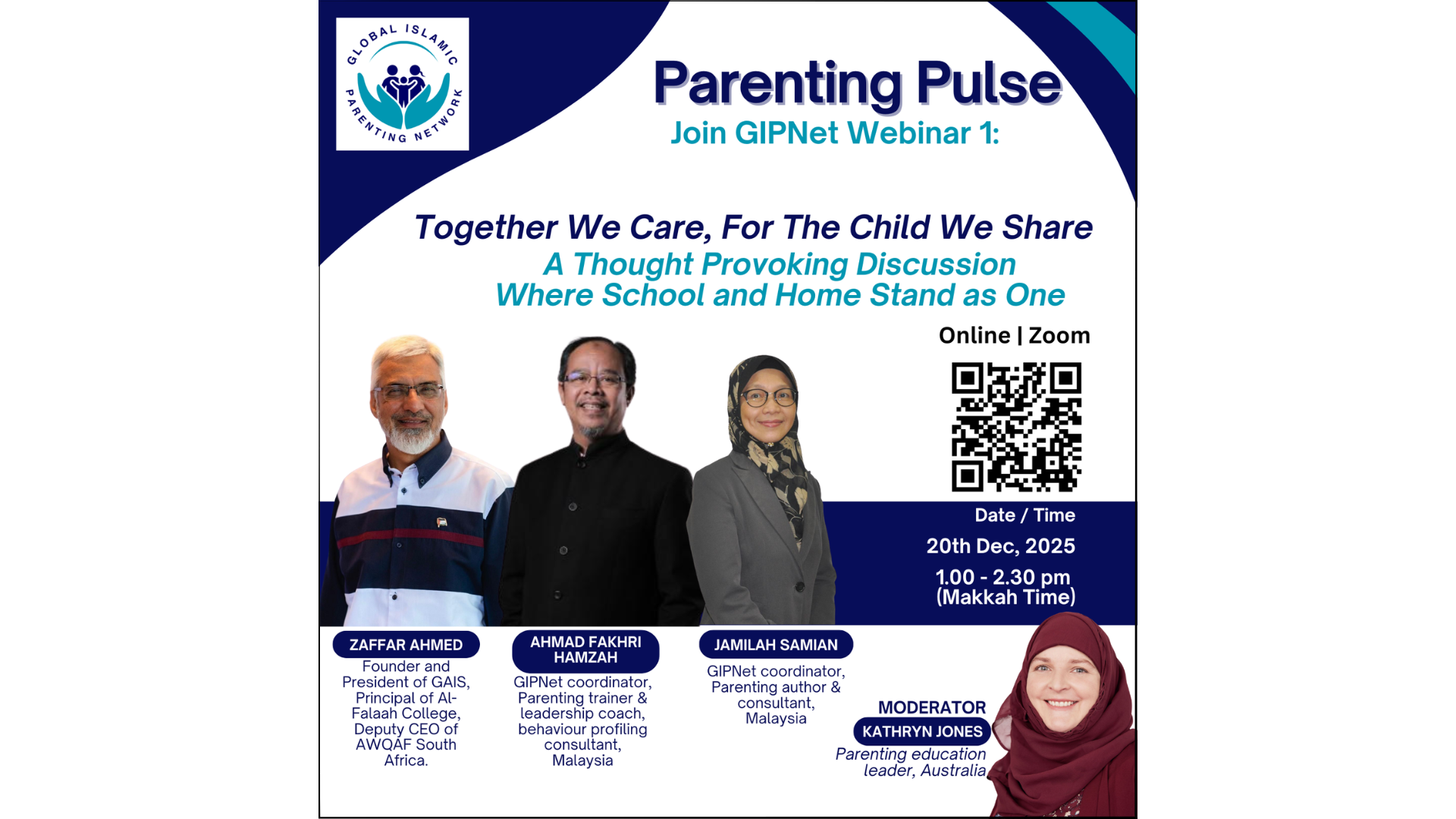
Together We Care for the Child We Share – Watch Webinar
Global Islamic Parenting Network (GIPNet) – Inaugural Webinar
The inaugural Global Islamic Parenting Network (GIPNet) webinar marked an important milestone in addressing a growing global concern: the widening disconnect between parents and schools in nurturing children. Moderated by Kathryn Jones, the session brought together voices from education leadership, corporate transformation, and parenting advocacy to reframe this relationship—from blame and criticism to shared responsibility .
At its heart, the webinar reinforced one powerful truth: children flourish when the key adults in their lives are aligned, not divided.
Core Theme
From Blame to Partnership in Raising Children
Modern parenting and education face unprecedented challenges—time pressure, technology overload, rising expectations, and emotional fatigue. The panelists agreed that the solution is not merely better systems, but better relationships, rooted in trust, compassion, and a child-centred mindset guided by Islamic values.
Panelist Highlights & Quotable Insights
Zaffar Ahmed – School Principal & Global Islamic Schools Leader
Focus: Reframing the Parent–School Relationship
Zaffar Ahmed emphasized that parents and teachers are not adversaries, but natural allies in a child’s life.
“There are only two groups of people who truly want a child to have a better life than themselves: the parents—and the teachers.”
Key insights from his session included:
- Parents and schools ultimately share the same aspiration: raising wholesome children with strong values who can serve humanity.
- Teachers invest emotionally in students and often care deeply about their success beyond academics.
- Schools should intentionally design welcoming, transparent communication channels—not just to address problems, but to celebrate positives.
- Explaining the why behind school policies helps parents become collaborators rather than critics.
“Children listen with their eyes far more than with their ears—they learn from what we model, not what we preach.”
Ahmad Fakhri – Corporate Leader & Parenting Strategist
Focus: The ‘Greater Village’ Ecosystem
Ahmad Fakhri expanded the discussion beyond school and home, introducing the idea of a Greater Village—an ecosystem involving parents, schools, community leaders, and the wider Ummah.
“Raising a child is not a private struggle; it is a communal responsibility.”
His key contributions included:
- Children are shaped by multiple layers: home, school, community, nation, and global Ummah.
- Conflict between parents and teachers drains energy that should be invested in the child.
- He introduced a practical rapport-building framework for parents (the “5S” approach), focusing on presence, tone, consistency, and emotional safety.
- Warned against destructive behaviours such as shaming, snapping, shutting down, and severing relationships.
“Children copy conduct, not curriculum—and they notice how we treat each other.”
Jamilah Samian – Parenting Author & Educator
Focus: Mindset Shifts for Parents
Jamilah Samian highlighted how modern parenting has become increasingly transactional, especially in fee-paying school environments.
“Sending our children to good schools is not a guarantee of good character—alignment at home matters more.”
Her reflections and guidance included:
- Earlier generations held deep respect for teachers, creating emotional safety for children.
- Today, some parents unconsciously treat schools like service providers expected to “fix” children.
- Parents remain the first and primary educators, while teachers receive children already shaped by home values.
- Introduced the concept of technoference—technology disrupting parent-child relationships through divided attention.
“When children feel unheard at home, no amount of schooling can compensate for that loss.”
She also offered practical strategies to manage disagreements:
- Never allow the child to become a messenger between adults.
- Pause before reacting emotionally.
- Resolve issues adult-to-adult with teachers.
- Build relationships with teachers early—before problems arise.
Shared Reflections & Takeaways
Across the discussion, several common insights emerged:
- Children suffer most when adults are in conflict—and thrive when adults are aligned.
- Character education begins with how adults behave, not just what they teach.
- Technology must be managed intentionally to protect relationships, not replace them.
- Respect, compassion, and consistency are the true foundations of effective education.
“Collaboration, not confrontation, is the only sustainable path forward for our children.” — Collective Panel Insight
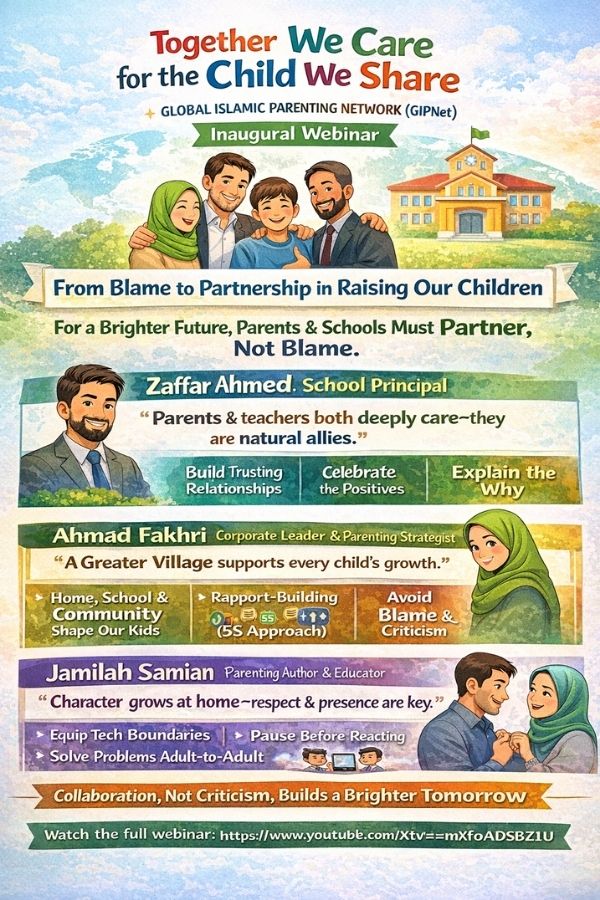
Summary Infographics
Call to Action
- Parents: Reflect on your daily presence—your tone, attention, and consistency shape your child more than instructions.
- Schools: Create communication that invites partnership, not defensiveness.
- Parents & Educators Together: Anchor decisions in compassion, focus on the child, and model the values you wish to see.
“Together, we care for the child we share.”
This inaugural webinar sets the foundation for GIPNet’s ongoing mission: to rebuild trust, alignment, and shared purpose between homes and schools—locally and globally.
Watch the full webinar : https://www.youtube.com/watch?v=mXfoADSBZIU