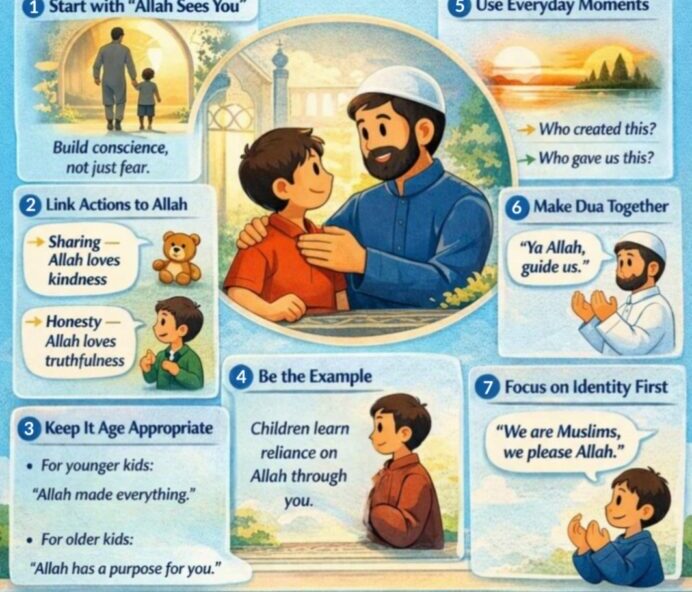
1. Start With “Allah Sees You.”
Simple message: “Allah sees what you do, even when no one else does.”
Why it matters: Builds internal conscience, not just fear of punishment.
2. Link Daily Actions to Allah
Say this often: “We do this because Allah loves it.”
Examples:
Sharing → Allah loves kindness
Honesty → Allah loves truthfulness
3. Keep It Age-Appropriate
For younger kids: “Allah made everything.”
For older kids: “Allah has a purpose for you.”
4. Use Everyday Moments
Turn life into lessons: Sunset → “Who created this?” Food → “Who provided this?” Goal: Make Tawhid alive, not abstract.
5. Be the Example
Ask yourself: “Do my actions reflect tawhid?”
Because: Children see belief before they understand it.
6. Repeat With Warmth
Notice Luqman’s tone: “O my son…”
Tip: Correct with connection, not lectures.
7. Make Dua Together
Short and simple: “Ya Allah, guide us.”
Impact: Children learn reliance on Allah through you.
8. Focus on Identity First
Instead of: “Don’t do that.”
Try: “We are Muslims; we choose what pleases Allah.”
Bottom Line
Build belief before behavior. When a child knows who they belong to, they understand how to live.