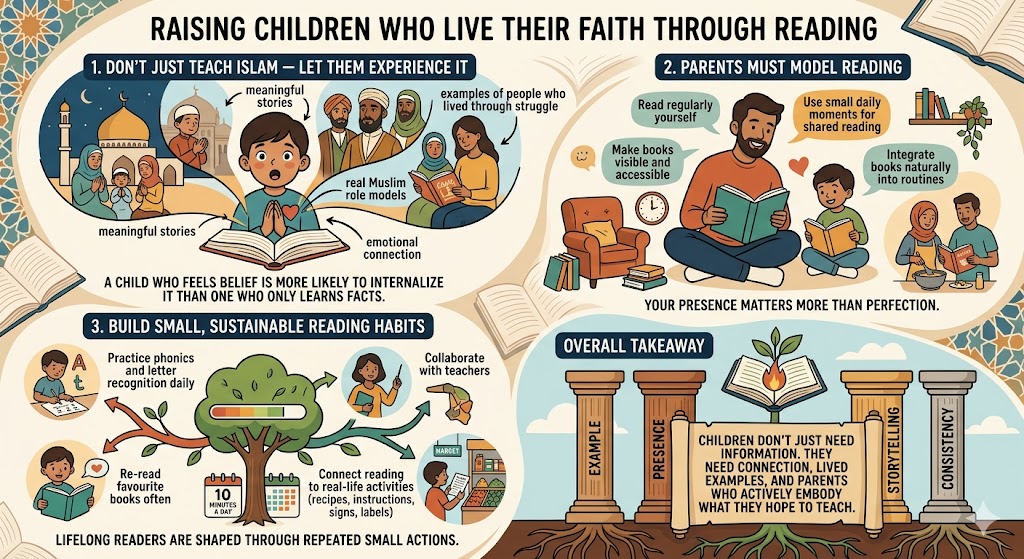
Instead of only telling children that du’a, faith, and Islamic values matter, help them see and feel these lessons through:
- meaningful stories
- real Muslim role models
- examples of people who lived through struggle with faith
The goal is for children to emotionally connect with Islam, not merely memorize concepts.
Key message:
A child who feels belief is more likely to internalize it than one who only learns facts.
2. Parents Must Model Reading
Children copy what they consistently observe.
Practical ways parents can do this:
- Read regularly yourself
- Make books visible and accessible
- Use small daily moments for shared reading
- Integrate books naturally into routines
Reading doesn’t require perfect schedules or long sessions.
Consistency matters more than duration.
Key message:
Your presence matters more than perfection.
3. Build Small, Sustainable Reading Habits
Lifelong readers are shaped through repeated small actions.
Recommended habits:
- Practice phonics and letter recognition daily
- Re-read favourite books often
- Collaborate with teachers
- Connect reading to real-life activities (recipes, instructions, signs, labels)
Even 10 minutes a day creates long-term impact.
Overall Takeaway
The series emphasizes that raising strong readers — and strong believers — happens through:
Example + Presence + Storytelling + Consistency
The underlying philosophy:
Children don’t just need information.
They need connection, lived examples, and parents who actively embody what they hope to teach.